Arizona Palm Trees
While palm trees are typically associated with tropical climates, some hardy varieties can endure the arid desert conditions found in Arizona. Selecting the right palms for your Arizona landscape can indeed be a challenge.
This vast state is predominantly desert, characterized by scorching summers and mild winters, and it sees minimal rainfall. During winter, temperatures range from 40°F to 75°F (4°C to 24°C), occasionally dipping low enough to cause frost.
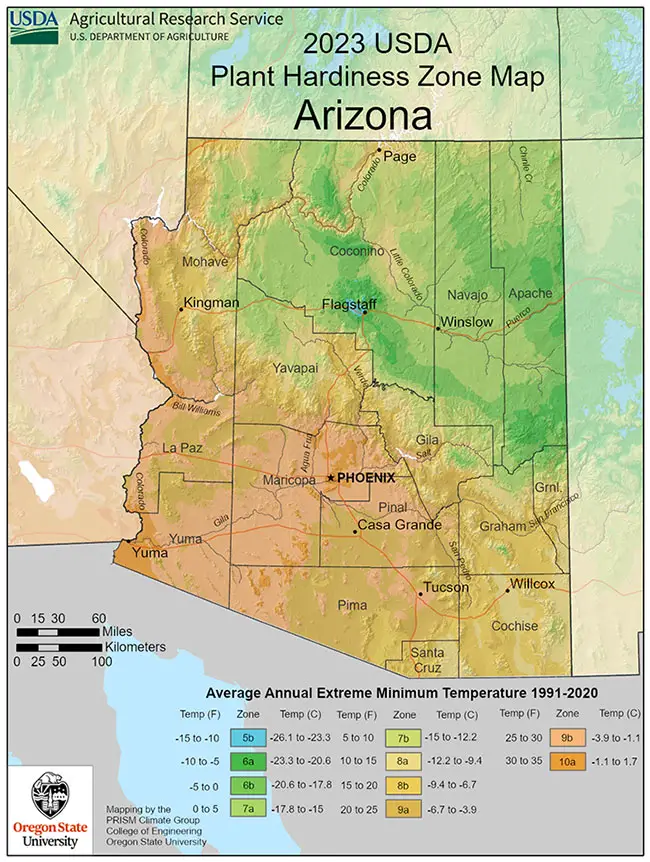
Summers in Arizona are notoriously dry, with temperatures soaring between 90°F and a sweltering 128°F (32°C to 53°C). The state holds the record for an all-time high of 128°F (53°C) and a bone-chilling low of -40°F (-40°C). Hurricanes and tornadoes are extremely rare occurrences in Arizona. The USDA hardiness zones in the state encompass a broad range, spanning from 4b to 10b.
Growing Palm Trees in Arizona
It’s important to recognize that the combination of intense sunlight and dry air isn’t ideal for palm trees accustomed to tropical conditions.
Therefore, when you’re selecting palm trees for your Arizona yard, opt for hardy varieties that can withstand the desert’s harsh environment. Despite their resilience, these palms still need enough water to thrive in these challenging conditions.
Here are some of the palm trees that can be grown in Arizona:
- Bismarck Palm Tree – Zones 8b – 11 (15 to 20F)
- Caranday Palm Tree – Zones 9a – 11 (20 to 25F)
- Mexican Fan Palm Tree – Zones 8b – 11 (15 to 20F)
- Mazari Palm Tree – Zones 6b – 11 (-5 to 0F)
- Triangle Palm Tree – Zones 10a – 11 (30 to 35F)
- Saw Palmetto Palm Tree – Zones 7a-11 (0 to 5 F)
- Pindo Palm Tree – Zones 7b-11 (5 to 10 F)
More Palm Trees»
Major Cities in Arizona
Glendale – Hardiness Zone 9a
Mesa – Hardiness Zone 9a
Phoenix – Hardiness Zone 9a
Scottsdale – Hardiness Zone 9a
Tempe – Hardiness Zone 9a
Tucson – Hardiness Zone 8b
Yuma – Hardiness Zone 10a